opening days
Smallpox Orphans the Parkers
A smallpox epidemic devastates [Hinge Gate](entity:location-recall-location-hinge-gate-585b7eec8cdc) and kills [Jack Parker](entity:character-recall-character-jack-parker-0186b9c9c4ee)’s parents, while Jack and [Lula Parker](entity:character-recall-character-lula-parker-9ff91ae41cd3) survive untouched. Their grandfather, [Old Caleb Parker](entity:character-recall-character-old-caleb-parker-9eac3b5a730f), who is immune from surviving the disease earlier in life, buries the dead, burns the family home, and takes the siblings away.
He arranges for their land to be sold and sends them toward [Kansas](entity:location-recall-location-kansas-de2a58274d0b) to live with an estranged aunt. The journey begins under quarantine, grief, and the practical burden of inheritance, establishing Jack’s responsibility for Lula and the moral uncertainty that will follow them.
the same day
The Burned Bridge
At the [Sabine River](entity:location-recall-location-sabine-river-fce26db42550), the Parkers find the bridge burned and are forced to use a new ferry. The ferryman charges Old Caleb an exorbitant toll, intensifying the old man’s suspicion that the bridge was destroyed to create a profitable crossing.
A scarred outlaw, [Cut Throat Bill](entity:character-recall-character-cut-throat-bill-921902c18136), arrives with [Fatty Worth](entity:character-recall-character-fatty-worth-ca42e42b3ef0), [Nigger Pete](entity:character-recall-character-nigger-pete-79aa91c84be8), and another companion. Bill’s contemptuous boasting about grave robbery and violence turns the crossing into a confrontation before the ferry even leaves shore.
during the crossing
The Ferry Confrontation
[Cut Throat Bill](entity:character-recall-character-cut-throat-bill-921902c18136) provokes Old Caleb, then attacks him when the old man refuses to be intimidated. Old Caleb unexpectedly fights back, landing several blows and revealing that his apparent bluster conceals real courage.
When Bill draws his revolver, Old Caleb fires his derringer twice, but Bill shoots him in the abdomen and threatens both siblings. The violence leaves Jack facing the collapse of the last adult protection in his life.
minutes later
The Water Devil
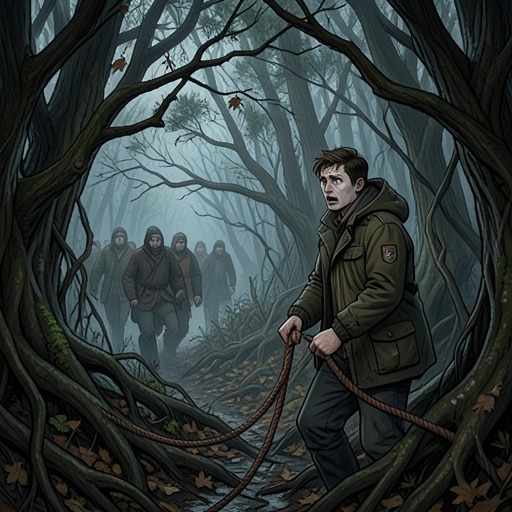
A sudden water tornado tears the ferry’s rope apart and throws everyone into the raging [Sabine River](entity:location-recall-location-sabine-river-fce26db42550). Jack is swept underwater, while Lula, the wounded Bill, Fatty, and [Nigger Pete](entity:character-recall-character-nigger-pete-79aa91c84be8) reach the opposite bank with the surviving horses.
Old Caleb disappears in the disaster, presumed dead, and Lula is carried away by the outlaws. Jack survives only by clinging to roots along the riverbank, converting his family tragedy into a rescue mission.
the following day
Sylvester’s Lawless Morning
Tom and Matilda rescue Jack and carry him to [Sylvester](entity:location-recall-location-sylvester-977454fed437), where he finds the sheriff dead after a bank robbery. The deputy, Deke, has abandoned law enforcement and is stripping the office of valuables while a captured robber waits in a cell.
The town’s citizens lynch Bobby O’Dell without trial, dragging him to a light pole and strangling him publicly. Jack’s attempt to obtain a posse collapses into a spectacle of mob justice, teaching him that official law may be weaker than collective violence.
that evening
The Hog and the Grave Digger
After the lynching, Jack meets [Eustace Cox](entity:character-recall-character-eustace-cox-b529c6425d39), a Black and [Comanche](entity:organization-recall-organization-464ba7227657)-descended grave digger and tracker who keeps company with a huge boar named [Hog](entity:character-recall-character-hog-2301e9cc6ef3). Eustace explains that he has buried the dead for money and sometimes used corpses to force townsmen to pay him.
Jack offers his inherited land as payment if Eustace will find Lula and help bring the outlaws to justice. Eustace agrees only if his partner [Shorty](entity:character-recall-character-shorty-e36ae5c97c76) joins them, making the rescue party an unstable alliance of desperation, skill, and self-interest.
the first night after Sylvester
Shorty Under the Stars
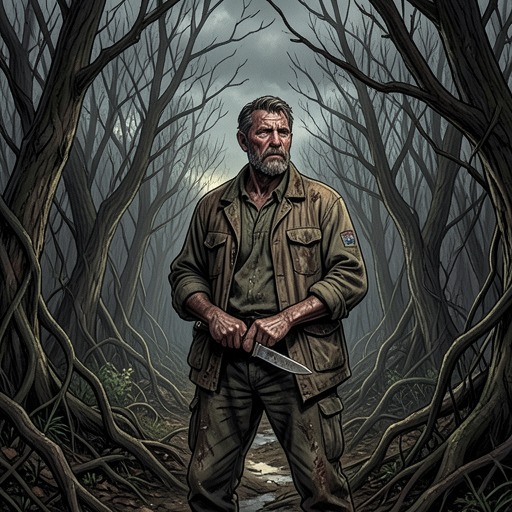
Jack and Eustace visit [Shorty](entity:character-recall-character-shorty-e36ae5c97c76), a dwarf bounty hunter who studies the stars through a telescope. Shorty accepts the mission for the possibility of land and bounty money, but warns Jack that rescuing Lula will require killing or permanently changing the men who took her.
Shorty recounts his childhood abuse, sale to a circus, escape from a circus-tent fire, training under [Walter the Midget](entity:character-recall-character-walter-the-midget-443b0e674156) and Annie Oakley, and later work as a scout and Pinkerton gunman. His biography explains both his extraordinary competence and his distrust of love, faith, and destiny.
first light
The Trail Begins
[Shorty](entity:character-recall-character-shorty-e36ae5c97c76), Eustace, Jack, and [Hog](entity:character-recall-character-hog-2301e9cc6ef3) return to the ferry landing and find blood trails leading away from the river. They discover a murdered boy whose horse was stolen by the fleeing gang, confirming that [Cut Throat Bill](entity:character-recall-character-cut-throat-bill-921902c18136)’s group is willing to kill anyone who obstructs them.
Eustace loses the gang’s direct trail in difficult terrain, so the party follows a lone rider toward [No Enterprise](entity:location-recall-location-no-enterprise-358bc1b13d58), hoping to capture one outlaw and learn where Lula has been taken.
later that day
Jimmie Sue’s Escape
In [No Enterprise](entity:location-recall-location-no-enterprise-358bc1b13d58), Jack enters a brothel seeking information and meets [Jimmie Sue](entity:character-recall-character-jimmie-sue-b69c992aaded). After she identifies [Fatty Worth](entity:character-recall-character-fatty-worth-ca42e42b3ef0) as a recent guest, she persuades Jack to take her away from [Steve](entity:character-recall-character-steve-6f13ad69f92a) and the life of prostitution that trapped her.
Jack and Jimmie Sue escape by a makeshift rope of sheets and blankets. Their sexual encounter becomes the beginning of an attachment that complicates Jack’s ideas about morality, respectability, and the possibility of love.
later that afternoon
Fatty’s Capture
[Jimmie Sue](entity:character-recall-character-jimmie-sue-b69c992aaded) identifies Fatty’s boots, and Eustace ambushes him while he is using an outhouse. Eustace knocks him unconscious with the butt of his enormous shotgun and carries him to an abandoned shack.
[Shorty](entity:character-recall-character-shorty-e36ae5c97c76) binds Fatty to a chair and brutally interrogates him. The violence disgusts Jack, but Fatty eventually reveals that [Cut Throat Bill](entity:character-recall-character-cut-throat-bill-921902c18136), [Nigger Pete](entity:character-recall-character-nigger-pete-79aa91c84be8), and Lula are heading toward the [Big Thicket](entity:location-recall-location-big-thicket-b70d69297af2).
the next morning
The Sheriff’s Bargain
Jack insists that Fatty be delivered alive to [Sheriff Winton](entity:character-recall-character-sheriff-winton-75acec4adb7c) rather than killed. The injured sheriff accepts the prisoner, confirms the bank robbery, and agrees to process the bounty claims.
Winton then joins the pursuit, claiming that his jurisdiction can be stretched and that the reward money should be divided among the hunters. The party now includes Jack, [Jimmie Sue](entity:character-recall-character-jimmie-sue-b69c992aaded), Eustace, [Shorty](entity:character-recall-character-shorty-e36ae5c97c76), Winton, and [Hog](entity:character-recall-character-hog-2301e9cc6ef3).
the following day
Katy’s Jailbreak
[Katy](entity:character-recall-character-katy-670ee7b5b514) arrives at the jail claiming to visit Fatty and shoots Deputy Harlis when he refuses to release him. She forces [Spot](entity:character-recall-character-spot-ac5146a88cc9) to open the cell, then Fatty kills Harlis by pushing a slop jar over his head.
Fatty and Katy escape on horseback, while Spot follows the pursuing party to warn Winton. The jailbreak confirms that the gang’s violence continues even when they are separated and hunted.
shortly afterward
Spot Joins the Hunt
[Spot](entity:character-recall-character-spot-ac5146a88cc9) reaches Winton and explains Fatty’s escape, warning that Fatty may attempt to ambush the party or reach the [Big Thicket](entity:location-recall-location-big-thicket-b70d69297af2) first. Winton initially refuses to pay for the warning, but Spot bargains for five dollars and decides to ride with them.
His decision adds a reluctant, practical observer to the posse. Spot’s insistence on compensation also gives him a fragile stake in a mission increasingly shaped by revenge rather than law.
near nightfall
The Trading Post Gunfight
The posse finds Fatty and [Katy](entity:character-recall-character-katy-670ee7b5b514)’s horses at an isolated trading post. [Shorty](entity:character-recall-character-shorty-e36ae5c97c76), Eustace, and Jack enter while Winton covers the rear, and the group learns that the outlaws are hiding behind the building’s curtain.
The bartender and several card players draw weapons. Shorty kills the bartender, [Hog](entity:character-recall-character-hog-2301e9cc6ef3) mauls another gunman, and the hidden attackers flee into Winton’s line of fire. The posse’s attempt to withdraw peacefully fails when the surviving men return for a final confrontation.
moments later
The Trading Post Massacre
The surviving card players come out armed, claiming that pride requires them to avenge their dead companions. Eustace fires both barrels of his four-gauge shotgun, destroying the men on the porch and killing the man who had returned to the group.
Winton reveals that Fatty used [Katy](entity:character-recall-character-katy-670ee7b5b514) as a shield and escaped, while Katy lies mortally wounded. She dies after Jack takes Lula’s stolen star necklace from her neck, giving him the first tangible sign that Lula is still alive.
the next day
The Innocent Dead
The posse pursues Fatty through the woods and discovers an old couple and their grandson murdered beside a stolen motorcar. Fatty has raped the woman, killed all three, and continued his escape in the car.
Jack insists that the family be buried before the pursuit resumes. His insistence marks a decisive effort to preserve Christian responsibility amid escalating violence, even as [Shorty](entity:character-recall-character-shorty-e36ae5c97c76) argues that practicality requires leaving the dead behind.
that night
Winton’s Comanche Wound
During a night camp, [Shorty](entity:character-recall-character-shorty-e36ae5c97c76) tells Jack how Winton’s wife and child were abducted during a [Comanche](entity:organization-recall-organization-464ba7227657) raid. Winton pursued the raiders, found his wife tortured to death and his child impaled, and was later captured and mutilated before Shorty rescued him with a long-range rifle shot.
The story explains Winton’s burned face, missing ear, and obsession with rescuing others. It also deepens the novel’s argument that vengeance can destroy the moral distinction between hunter and hunted.
the following day
The Milk Wagon Trail
The posse finds a murdered milkman, a dead dog, overturned milk cans, and sweet potatoes scattered across a logging road. Fatty has stolen the wagon and killed the animals and driver to continue moving.
A wounded boy confirms the attack and is given a spare horse. The evidence makes Fatty’s path unmistakable, but it also shows that his survival depends on consuming the lives and property of everyone he encounters.
after reaching Livingston
Efrem and Ella’s Testimony
In [Livingston](entity:location-recall-location-livingston-fd4179fde26a), [Efrem](entity:character-recall-character-efrem-fe4bea246643) and his masked sister [Ella](entity:character-recall-character-ella-90e3fa62618f) tell the posse how [Cut Throat Bill](entity:character-recall-character-cut-throat-bill-921902c18136)’s gang destroyed their farm. Bill’s men mutilated Efrem’s foot, raped Ella, cut out her tongue, and murdered the young outlaw who objected to their behavior.
Their testimony gives Jack a fuller picture of Bill’s sadism and transforms the pursuit into a collective demand for retribution. Ella’s mutilation also echoes the bodily injuries carried by Winton and [Shorty](entity:character-recall-character-shorty-e36ae5c97c76), binding the victims through shared trauma.
after Efrem and Ella leave
The Posse Rearms
[Shorty](entity:character-recall-character-shorty-e36ae5c97c76) redistributes the captured weapons: he keeps the Sharps rifle, Eustace retains the four-gauge, Winton receives an automatic pistol, Jack receives a navy revolver, and [Jimmie Sue](entity:character-recall-character-jimmie-sue-b69c992aaded) receives a Winchester. [Spot](entity:character-recall-character-spot-ac5146a88cc9) is given an unreliable pistol.
The rearming formalizes the group as a fighting unit. Jack remains uneasy with guns, but the mission has made him responsible for using one, whether he sees himself as a protector or a killer.
early morning near the camp
The Big Thicket Camp
Jack discovers the gang’s camp from a hillside. A black bear is chained nearby, while [Cut Throat Bill](entity:character-recall-character-cut-throat-bill-921902c18136) and [Nigger Pete](entity:character-recall-character-nigger-pete-79aa91c84be8) torture [Spot](entity:character-recall-character-spot-ac5146a88cc9) beside a fire after catching him away from the main party.
Spot does not betray the posse. Bill cuts his forehead and throat, then Pete pushes him toward the bear, which kills and partially consumes him. Jack watches helplessly, and Spot’s death becomes the emotional point of no return for the rescue mission.
immediately afterward
The Bear’s Release
[Shorty](entity:character-recall-character-shorty-e36ae5c97c76) finds Jack watching [Spot](entity:character-recall-character-spot-ac5146a88cc9)’s murder and explains that neither of them could safely intervene alone. They return for Eustace, who has been drinking and initially tries to attack the camp without a plan.
After Shorty and Jack restrain him, Eustace absorbs the news of Spot’s death and turns his grief into murderous resolve. The three men return to the overlook and prepare a surprise assault.
later that morning
The Bear Turns
[Shorty](entity:character-recall-character-shorty-e36ae5c97c76) cuts the bear’s rope while one of the gang members torments it with a burning stick. The bear suddenly attacks, throws the tormentor into the fire, and scatters the gang’s attention.
The released bear creates the opening Shorty needs. Eustace charges downhill with the shotgun, while Jack and Shorty attack from separate angles, turning the gang’s cruelty toward animals into the mechanism of its destruction.
moments later
The Camp Shootout
The posse assaults the camp as the gang fires wildly at the fleeing bear. Eustace blasts the twin gunmen, [Shorty](entity:character-recall-character-shorty-e36ae5c97c76) wounds [Nigger Pete](entity:character-recall-character-nigger-pete-79aa91c84be8), and Winton rides into the battle before being shot from his horse and crushed beneath it.
[Jimmie Sue](entity:character-recall-character-jimmie-sue-b69c992aaded) shoots the hopping gunman, [Hog](entity:character-recall-character-hog-2301e9cc6ef3) attacks a knife-wielding naked outlaw, and Jack kills the man who comes at him. The fighting is chaotic and costly, but the posse breaks the camp’s resistance.
immediately after the assault
Fatty’s Final Stand
Inside the cabin, Jack finds Lula and [Cut Throat Bill](entity:character-recall-character-cut-throat-bill-921902c18136), but Bill drags her through the back door. Fatty emerges and fires at Jack; Jack returns fire, then finishes him with both barrels of Eustace’s four-gauge shotgun.
The recoil knocks Jack unconscious and badly injures him, but Fatty is dead. Jack’s first deliberate killing of a principal enemy comes not as triumph but as a brutal culmination of fear, rage, and the need to reach Lula.
minutes later
The Long Shot
[Cut Throat Bill](entity:character-recall-character-cut-throat-bill-921902c18136) escapes with Lula on horseback. Jack and [Shorty](entity:character-recall-character-shorty-e36ae5c97c76) pursue but quickly realize their exhausted horses cannot catch him before he reaches the forest.
Jack orders Shorty to attempt the impossible shot. Shorty steadies the Sharps rifle from a stump and fires across more than a mile, striking Bill through the spine and killing the horse beneath him.
shortly afterward
Lula’s Reunion
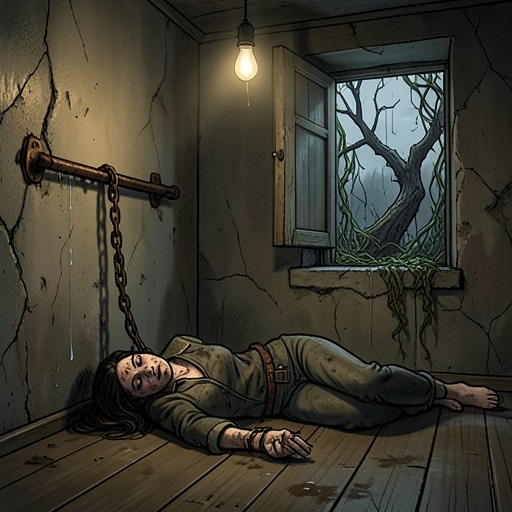
Jack finds Lula running on foot after her horse collapses. She mistakes him for an attacker and shoots him in the knee with Old Caleb’s derringer before recognizing him.
The siblings embrace and weep, but Lula immediately reveals that captivity has changed her and that she cannot simply return to her former innocence. Jack gives her back the star necklace, and their reunion becomes an act of acceptance rather than restoration.
later that day
The Dead Are Gathered
Eustace survives his wounds, while [Spot](entity:character-recall-character-spot-ac5146a88cc9) and Winton are placed in the wagon with the gang’s dead. [Nigger Pete](entity:character-recall-character-nigger-pete-79aa91c84be8), who survived the initial battle, crawls away and dies in the woods.
Jack, Lula, [Jimmie Sue](entity:character-recall-character-jimmie-sue-b69c992aaded), [Shorty](entity:character-recall-character-shorty-e36ae5c97c76), and Eustace leave the camp with the bodies, horses, weapons, and supplies. The rescue succeeds, but the wagon carries a record of the deaths that made it possible.
the following weeks
Rewards and Restitution
The survivors travel to [Tyler](entity:location-recall-location-tyler-23bf1252f91a) and eventually collect bounty money from several jurisdictions. Jack honors his promise by signing the land over to Eustace and [Shorty](entity:character-recall-character-shorty-e36ae5c97c76), though their friendship leads them to accept only part of it and leave Jack his parents’ property.
[Spot](entity:character-recall-character-spot-ac5146a88cc9) is buried beneath an oak on Old Caleb’s land, Winton is buried in [No Enterprise](entity:location-recall-location-no-enterprise-358bc1b13d58), and stones are placed for both. Jack also marks Old Caleb’s grave despite never finding his body, preserving the family’s dead through memory rather than physical remains.
some years later
The Oil Discovery
Oil is discovered along the boundary of Eustace and [Shorty](entity:character-recall-character-shorty-e36ae5c97c76)’s land, making both men wealthy. They drill only one well, choosing to preserve the surrounding trees and farmland rather than turn the property into an industrial field.
The discovery vindicates Shorty’s belief that oil is the future, but their restraint gives the prosperity a moral counterweight. The land remains connected to farming, memory, and the community they built from violence.
a few years later
Shorty and Lula Marry
[Shorty](entity:character-recall-character-shorty-e36ae5c97c76) begins visiting Lula, and the two eventually marry in [Hinge Gate](entity:location-recall-location-hinge-gate-585b7eec8cdc). Their relationship grows from shared fascination with stars, dew, and the strange structures of the world, as well as from Shorty’s discovery that Lula accepts him publicly without shame.
Their marriage contradicts Shorty’s earlier rejection of true love. Lula’s survival does not erase her trauma, but it gives her a future in which her difference and experience are not treated as disqualifications.
later years
Eustace’s Inheritance
[Hog](entity:character-recall-character-hog-2301e9cc6ef3) eventually dies, and Eustace later dies when a wagon overturns and breaks his neck. Despite his history with alcohol, Jack believes Eustace had kept his promise not to drink.
Eustace leaves his land, house, part of the oil well, and the four-gauge shotgun to Jack and [Jimmie Sue](entity:character-recall-character-jimmie-sue-b69c992aaded). The inheritance makes them wealthy and preserves the material legacy of the man who helped rescue Lula.
about ten years later
Shorty’s Star Tower
[Shorty](entity:character-recall-character-shorty-e36ae5c97c76) and Lula have a son, James, and Shorty builds a tall observatory on his land with a more powerful telescope. He never makes the grand travels he once imagined, but he finds a settled happiness in observing the heavens.
Shorty dies at the telescope with his eye turned toward the stars, fulfilling his private wish to meet death beside the celestial world he claimed as his own.
after Shorty’s death
Jack’s Larger Faith
Jack drives to [Shorty](entity:character-recall-character-shorty-e36ae5c97c76)’s tower and looks through the telescope, thinking about Mars, Shorty’s old dreams, and the lives that grew out of the rescue. He concludes that Shorty’s spirit no longer needs another world because he had found love and contentment here.
The stars also transform Jack’s religious understanding. His inherited ideas of heaven and angels seem too small for the universe, and he accepts a larger mystery beyond simple doctrine, moving from certainty through doubt toward wonder.